


Music
"Music gives children another way to play, explore, imagine and express their ideas creatively." (inspired by Bryce-Clegg's approach to creativity and play)
🎵 “The fact that children can make beautiful music is less significant than the fact that music can make beautiful children.”
Cheryl Lavendar 🎵
Intent
We provide children with opportunities to sing, play instruments, listen to and appreciate a wide range of musical styles and traditions. Through practical, hands-on experiences, pupils develop their musical knowledge, vocabulary and skills, including pulse, rhythm, pitch, dynamics and performance.
Our music curriculum is designed to encourage curiosity, imagination and collaboration. We recognise the important role music plays in supporting children's emotional wellbeing, communication skills and cultural understanding. By performing, composing and responding to music, children learn to express themselves, work together and celebrate their achievements.
We strive to ensure that every child experiences the joy of making music and develops the confidence to participate, perform and succeed, regardless of their starting point or prior experience.
Our aim is for all children to leave our infant school with a love of music, an appreciation of its place in the world, and the confidence to continue their musical journey.
Implementation
Our music curriculum is carefully planned to ensure that all children develop musical knowledge, skills and understanding through a progressive and engaging range of experiences.
Music is taught through high-quality lessons that build upon prior learning and introduce new concepts in a clear and age-appropriate way. Children develop their understanding of key musical elements, including pulse, rhythm, pitch, tempo, dynamics and timbre, through singing, listening, composing and performing activities.
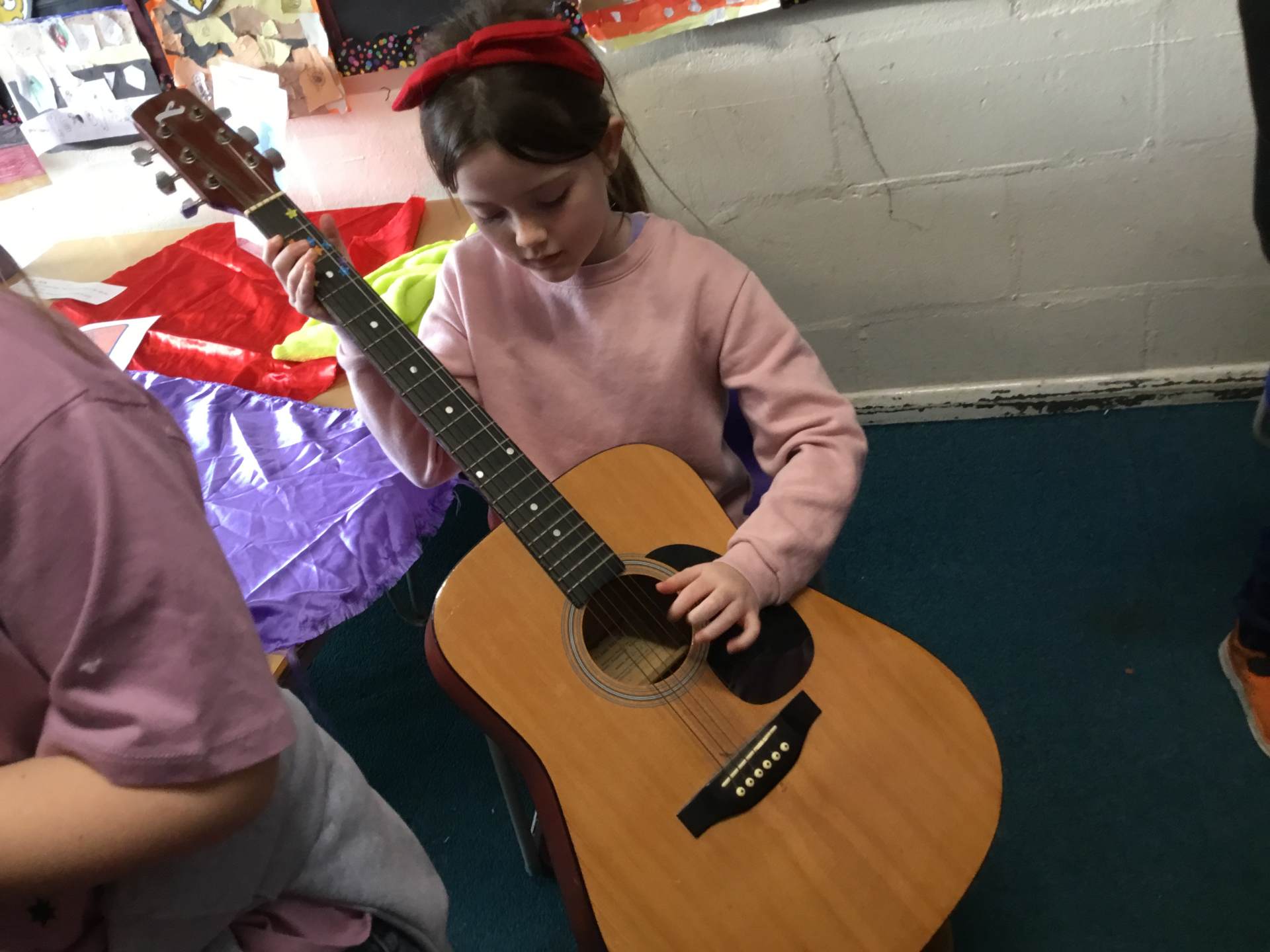
Singing forms the foundation of our music curriculum. Children regularly take part in singing assemblies, classroom singing activities and performances, helping them develop confidence, musicality and a sense of enjoyment. Pupils also have opportunities to explore and play a variety of percussion instruments, enabling them to experiment with sound and develop their performance skills.
Through carefully selected musical genres, composers and traditions from different cultures and time periods, children learn to listen to, appreciate and respond to a wide range of music. They are encouraged to express their thoughts and feelings about what they hear, developing both musical vocabulary and critical listening skills.
Music lessons are inclusive and accessible to all learners, with practical activities that encourage participation, creativity and collaboration. Teachers use assessment for learning to monitor progress and ensure that children are supported and challenged appropriately.
Performance opportunities are an important part of our music provision. Children regularly share their learning through class assemblies, school productions, concerts and celebration events, allowing them to develop confidence and take pride in their achievements.
By providing rich musical experiences throughout school life, we ensure that all children have the opportunity to develop as enthusiastic, confident and creative musicians.
In practice, children:
- Sing a wide variety of songs and rhymes.
- Explore and play percussion instruments.
- Learn and use musical vocabulary.
- Listen and respond to music from different cultures and traditions.
- Create simple rhythms and musical patterns.
- Perform individually and with others.
- Develop confidence, enjoyment and creativity through music-making.
Impact
The impact of our music curriculum is that children develop a genuine enjoyment and appreciation of music whilst building the knowledge, skills and confidence to engage with music both in school and beyond.
Children leave our infant school able to sing confidently, keep a steady pulse, recognise and create simple rhythms, and use musical vocabulary to talk about the music they hear and perform. They develop positive attitudes towards music and are encouraged to express themselves creatively through singing, playing instruments, composing and performing.
Through regular musical experiences, children grow in confidence, resilience and self-esteem. They learn how to work collaboratively, listen carefully to others and celebrate the achievements of their peers. Performance opportunities help children to develop a sense of pride in their accomplishments and foster a willingness to participate in new experiences.
Our music curriculum also broadens children's understanding of the world by introducing them to a diverse range of musical styles, cultures and traditions. As a result, pupils develop respect for different forms of musical expression and an appreciation of music's role in bringing people together.
We measure the impact of our music curriculum through:
- Ongoing teacher assessment and observation during lessons.
- Children's ability to apply musical skills and vocabulary.
- Participation and confidence in performances.
- Pupil discussions about their musical learning.
- Evidence of progression in singing, playing, listening and composing activities.
Ultimately, our pupils leave Key Stage 1 as enthusiastic young musicians who have developed a love of music, confidence in their abilities and a strong foundation for future musical learning.